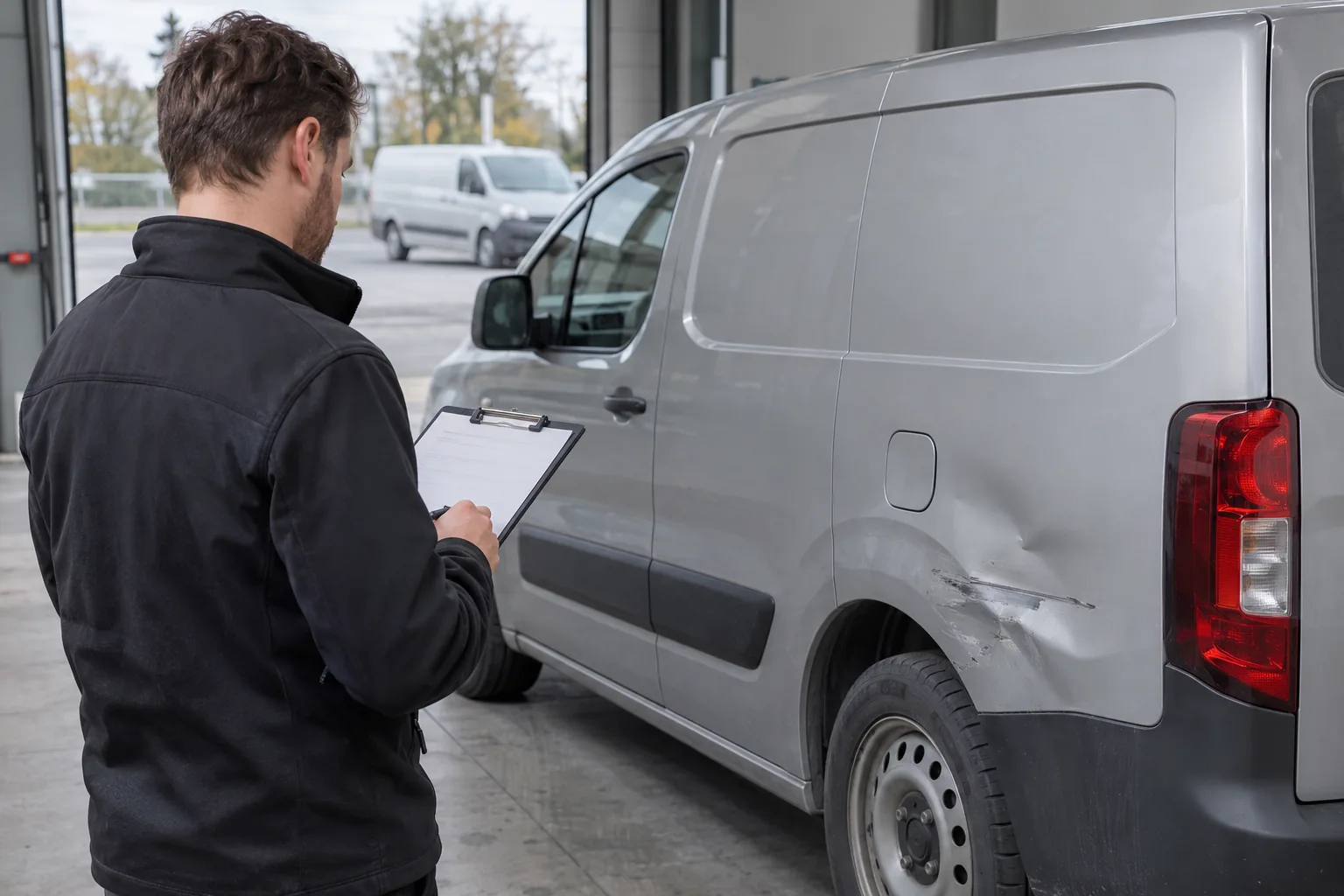
1. What should the driver report?
Deal with safety first. If anyone is injured or killed, call 112, give first aid within your ability and leave the vehicles where they are. If nobody is injured or killed, clear the vehicles from the scene so they pose no danger and do not block traffic. Arrange roadside assistance if the vehicle may be unsafe to drive.
Once it is safe, the driver uses the agreed reporting channel. Ask for the fleet vehicle ID, when and where it happened, a brief account, the vehicle’s condition and its current location. The driver sends photos taken safely and either a signed collision statement or details of police attendance, as applicable. Give drivers a backup contact for when the coordinator is unavailable.
2. How do you open a case and choose where to report it?
Open a record under an internal reference straight away. Add the insurer’s claim number when it arrives. For a claim against the at-fault party’s OC, use the Polish Insurance Guarantee Fund (UFG) database to check the other vehicle’s policy on the incident date. The result helps identify where to report the claim. Liability is assessed during the claims process.
In Poland, OC is compulsory motor third-party liability insurance. AC is optional cover for your own vehicle within the terms of the contract. OWU are the general insurance terms. For AC, find the version of the OWU attached to the policy, any endorsements and any fleet-specific agreements. Check the reporting deadline and channel and the inspection requirements before repairs. Section 50 of the PZU Auto terms illustrates the duties under one product.
3. Who is responsible at each stage?
Assign each role and a backup before an accident happens. The same person can fill more than one role. The coordinator keeps the next action moving and refers costs above their approval limit to the person authorised to decide.
| Stage | Who leads? | What to record |
|---|---|---|
| Internal report | Driver | Incident account, evidence, vehicle location and availability |
| Claim opening and inspection | Fleet coordinator or authorised partner | Claim reference, outstanding documents and inspection date |
| Repair order | Person authorised to approve expenditure | Confirmed scope, payer and required approvals |
| Scope change after dismantling | Workshop documents it, coordinator obtains approvals | Photos, change in cost and decision before extra work |
| Handover and close-out | Designated collector and settlement lead | Handover, return to service and outstanding balance |
4. Which approvals do you need before commissioning work?
Check separately who can act for the company, what the insurer has confirmed and whether the vehicle owner or finance provider must consent. The claim number confirms that the case has been logged. Establish who can order the work and who will pay before commissioning it.
Specify who can sign the repair order, receive case information and approve extra work. If costs exceed a limit, record who can approve the difference and which budget covers it. For leased or rented vehicles, check the agreement for repair, handover and payment conditions. VWFS, for example, describes separate consent for payment to the repairer. KNF’s recommendations on keeping records and communicating about a claim are addressed to insurers.
5. What goes in the log and how do you measure downtime?
Keep one row per claim and link it to the case file with restricted access. The row below is fictional. Update the stage, person responsible and next due date whenever the status changes. Keep only the data needed to manage the case in the operational log. Store required document scans in the case file.
- Measure downtime from when the vehicle goes out of service until it is available for work again. Record it if the vehicle stays in use until the workshop intake date.
- Separate periods of active repair from time spent waiting for paperwork, inspection, approvals, parts or collection. Use consistent units and count overlapping periods only once.
- If you arrange a replacement vehicle, log its availability separately from the damaged vehicle’s downtime. Give the next action its own due date, separate from the estimated collection date.
| Vehicle | Case reference | Stage | Person responsible | Next action and due date |
|---|---|---|---|---|
| VAN-07 | F-014 / awaiting claim number | Inspection date pending | Fleet coordinator | Confirm inspection by Friday, 12 noon |
6. Does collecting the vehicle close the claim?
Collection ends the workshop stage. Record who collected the vehicle, compare the completed work against the repair order and approved changes, and keep the repair records and any invoice. Record the end of downtime when the vehicle is available for work. If a further payment or document is outstanding, keep the claim marked as awaiting settlement and set a date to follow up.
When discussing claims support for your fleet, bring an anonymised outline of how reports are made, identify a point of contact and list the decisions your company wants to retain.
Scope of this guide
This is general information, not a decision on a specific claim. The right next step depends on the documents, damage and insurer’s position.
Sources and further reading
These Polish-language sources were checked on 5 November 2026. The responsibility matrix and claim log are templates for your company to adapt. PZU, VWFS and NFM describe their own products or procedures.
- Wolsztyn Police — what to do after a collision or accident
- Polish Road Traffic Act — Article 44, consolidated text dated 4 November 2026
- Polish Financial Ombudsman and UFG — checking motor liability cover in the UFG database
- PZU Auto — policy terms UZ/5/2026 of 20 January 2026, section 50
- Polish Civil Code — Articles 95–96, consolidated text dated 3 November 2026
- Volkswagen Financial Services — example of authorising payment to the repairer
- GDPR — Article 5(1)(c) and (f), Official Journal of the EU of 4 May 2016
- Polish Financial Supervision Authority (KNF) — motor claims recommendations 11–12
- Nivette Fleet Management — incident reporting and fleet support, pp. 7–8