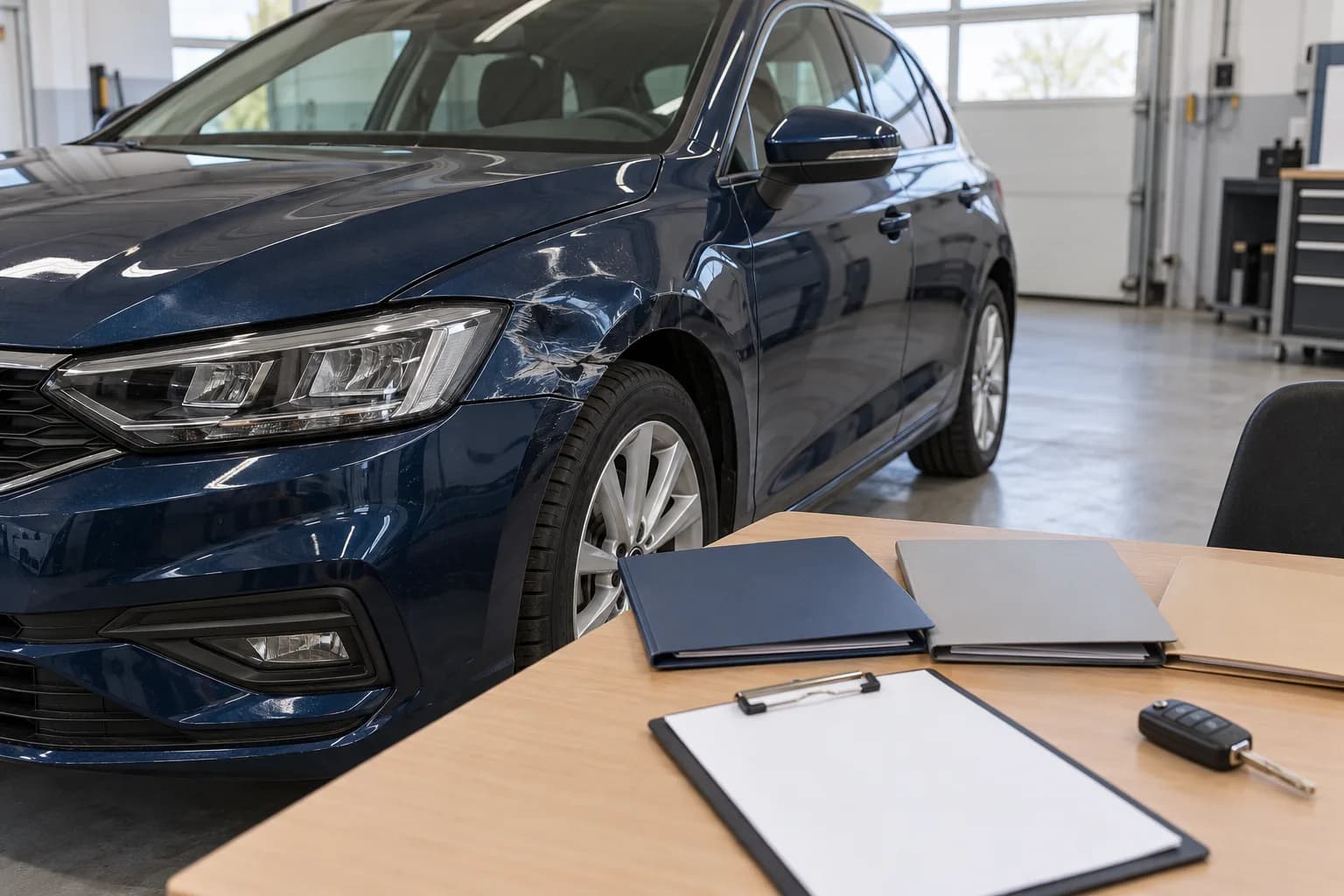
1. Notify the owner and insurer
Deal with safety and evidence at the scene first. Then check your leasing company’s claims instructions, lease agreement and insurance policy. For a company vehicle, also inform the person responsible for it. Do not assume that a driver’s notification to one organisation has reached the others.
The lessor, called finansujący in Polish contracts, owns the car; the lessee, or korzystający, uses it under the agreement. The driver may be a third person. Article 709⁷ of the Polish Civil Code covers maintenance and significant repairs; check your agreement for the detailed contact procedure.
In Poland, OC is compulsory third-party liability insurance, AC is voluntary insurance for the vehicle itself, and OWU means the general insurance terms. Claiming under the responsible driver’s OC does not replace duties to the leasing company. For AC, check cover, notification deadlines, exclusions and inspection requirements in the applicable policy and OWU.
2. Map the roles before ordering work
Fill in this map with the people or departments handling your claim. It is a practical contact checklist, not a universal allocation of authority under every lease.
| Participant | What to establish | What to keep | What the next stage depends on |
|---|---|---|---|
| Driver | Facts of the incident and notification to the responsible contact | Photos, parties’ details, statement or police information | A complete notification record |
| Lessee / vehicle manager | Notifications, claim reference and their own authority | Notification receipts and correspondence | Contract requirements and owner’s instructions |
| Leasing company | Permitted workshop, required approvals and payment instructions | Approval or confirmation of the applicable process, authorisation | Repair order and settlement arrangements |
| Insurer | Inspection, assessment scope and position on costs | Claim reference, estimate, decisions and correspondence | Liability assessment and extent of cover |
| Workshop | Order scope, extra work, invoice and handover | Repair order, estimate and repair records | Confirmed authority and payment arrangements |
3. Three matters a claim number cannot settle
Separate approval of the workshop and repair method from authority to handle correspondence and instructions on who receives compensation. Check each document’s scope, vehicle, claim reference and named recipient. Permission to receive money does not by itself define the repair method or price.
The Polish Financial Ombudsman explains that a lease may restrict workshop choice, for example by requiring an ASO, a manufacturer-authorised service centre. This does not mean every lease requires one. Ask the owner about your proposed workshop before signing an order; if the insurer suggests another network, clarify how both requirements can be met.
One example, rather than a general rule: PKO Leasing asks customers to report damage and offers a helpline and customer portal. It lists the financing agreement, vehicle registration document, driver’s licence and the responsible driver’s statement as documents to prepare. For a different lessor, check its own procedure and the requirements for your incident.
4. Checklist before the car goes in for repair
Keep the answers in one record. Send requested documents through an agreed secure channel, leaving unnecessary personal details out of an initial contact form.
- Who notified the lessor and insurer, when, and under which references?
- Does the proposed workshop and repair method meet the lease requirements, and is separate approval needed?
- Who may sign the order, approve extra work and collect the vehicle?
- Who will receive compensation, and which document confirms this?
- Who will be named as the customer on the invoice, and how have VAT, any excess and a possible cost difference been addressed?
- Which repair records will you receive, and which must go to the owner or insurer?
5. Invoice, VAT and handover records
Before work begins, agree who is the customer on the invoice, who pays and how funds will be transferred. Do not infer a net or gross settlement solely from the leasing company’s ownership. The Ombudsman discusses the relevance of who bears repair costs, who receives the invoice and the right to deduct VAT. Your documents and tax circumstances need to be checked individually.
At handover, compare completed work with the order and approved additions. Ask for the invoice, repair scope and available inspection results relevant to the work. Establish whether the leasing company has also received the records. If an item remains disputed, request a written explanation and identify who is expected to settle it.
6. What if the insurer raises a total loss?
Ask the lessor for separate instructions on the lease settlement, compensation and damaged vehicle. Do not assume a payout automatically closes every obligation or that you may sell the car yourself. Article 709⁵ concerns loss of the leased asset and its consequences; an insurer’s classification should not be equated with the legal effects of your contract without assessment.
A car being off the road after a collision is not, by itself, a basis for stopping lease payments. Article 709¹³ provides for payment on the agreed dates. Agree any schedule change with the lessor. Check any GAP policy separately; this article does not determine whether or how much it pays.
7. Can minor damage be repaired without reporting it?
Do not decide solely on the size of a scratch or a plan to pay privately. Check the reporting and repair duties in the lease and insurance contracts. Ordering a privately funded repair does not replace required notifications or approvals.
8. What should you prepare for a workshop enquiry?
Provide the car model, incident date, whether it is driveable, the lessor’s name and the claim stage. Explain which approvals you have and which are pending. Discuss the possible scope of assistance and next documents with Glossline; making contact does not establish a lessor partnership or confirm repair funding.
The following guides expand on OC documents, AC terms and repair planning.
Scope of this guide
This is general information, not a decision on a specific claim. The right next step depends on the documents, damage and insurer’s position.
Sources and further reading
These Polish-language sources concern Poland. The PKO Leasing procedure is one company’s example, not a rule for every contract or evidence of a Glossline partnership. Checked on 3 November 2026. General information, without an individual legal or tax assessment.
- Polish Civil Code: Articles 709¹, 709⁵, 709⁷ and 709¹³; text dated 16 October 2026
- Polish Financial Ombudsman: leased cars and insurance, pp. 15–20 and 24–25; file in the February 2025 directory
- PKO Leasing: reporting damage and preparing documents; accessed 3 November 2026
- PZU: OC, AC and OWU explained; 27 November 2024