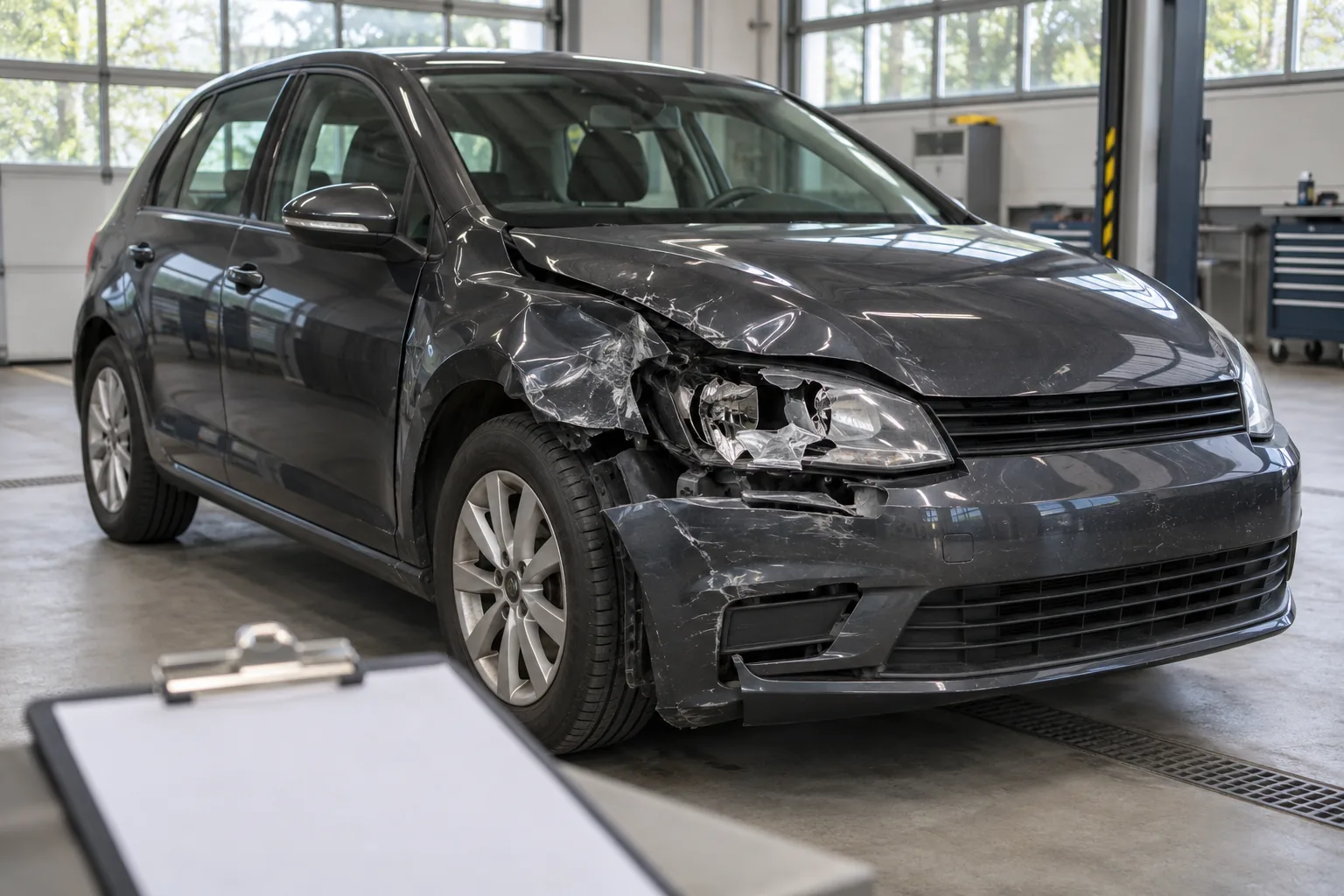
When does an insurer settle a claim as a total loss?
For example, section 12 of the PZU Auto terms for offers from 21 March 2026 uses a threshold of more than 70% of the vehicle’s value. Those terms also specify the valuation date and how salvage is valued. Look for the corresponding clauses in the version that applies to your policy.
| What to check | Other driver’s OC | Your own AC |
|---|---|---|
| Basis | Compulsory motor third-party liability insurance. Polish Civil Code rules on compensation apply. | Voluntary cover for your own vehicle (autocasco). Check the contract, cover option and general insurance terms (OWU). |
| Classification | Restoring the car is impossible or would entail excessive cost. On economic grounds, the justified repair cost must exceed the car’s pre-accident market value. | The applicable OWU set the threshold and how the repair cost is calculated. |
| Amount | Start with the pre-accident market value minus the market value of the damaged vehicle (salvage). | Check how vehicle and salvage values are set, the valuation date and any excess. |
How do you check the three figures?
- Pre-accident value. Check the VIN, engine variant, equipment, mileage and condition before the collision. Ask for the reason behind each adjustment. If something differs, provide evidence such as a VIN-based equipment list, photographs or service records.
- Repair cost. Compare the recorded damage with the photographs and inspection report. Check the parts categories, labour rates and VAT. Under OC, ask whether the insurer used the same criteria for the total-loss assessment and the partial-loss estimate.
- Salvage value. Ask how the insurer arrived at the figure. If it relies on an auction offer, check the description, which components are included, the price, the expiry date and the collection terms. If the buyer backs out or changes the price, keep the correspondence and ask for a new valuation.
How does the settlement calculation work?
Take an illustrative example. The car was worth PLN 40,000 before the collision, and the justified repair cost in the OC estimate was PLN 44,000. The repair cost exceeds the car’s value. If the salvage market value is PLN 11,000, the basic calculation for damage to the car is PLN 40,000 − PLN 11,000 = PLN 29,000.
If the salvage valuation is revised to PLN 8,000, the difference rises to PLN 32,000 on the same assumptions. The amount changes while the comparison between the repair cost and the car’s pre-accident value stays the same. In a complaint, identify the figure or assumption in dispute, attach the evidence and say which valuation you want recalculated.
Can you repair a car after a total-loss decision?
If the decision was based on cost, get a separate assessment of whether the car can be repaired safely. Before authorising work, ask the workshop to assess the structure and safety systems and explain what the manufacturer’s repair documentation requires. Arrange transport for inspection if the car’s condition is uncertain.
Polish road traffic law requires an additional technical inspection in certain cases, including after repair of damage that meets the statutory definition of significant damage (szkoda istotna, Article 81(11)(5)). This concerns damage to specified structural, braking or steering components that affects safety and is identified by the insurer or the Insurance Guarantee Fund (UFG). Also check whether a road traffic authority has ordered an additional inspection.
Does the insurer take the damaged car?
A total-loss settlement decision does not transfer ownership. For OC claims, the Polish Financial Supervision Authority (KNF) recommends that insurers help owners deal with salvage, for example by identifying a buyer willing to pay the valuation amount. Verify the offer and your authority to sell before agreeing to a sale.
What if the car is leased?
Send the decision and the valuations to the leasing company. Check the contract to see who can sell the damaged car, who receives the payment and how the lease will be settled. Clarify those points before accepting a purchase offer or authorising repairs.
Scope of this guide
This is general information, not a decision on a specific claim. The right next step depends on the documents, damage and insurer’s position.